Why You're Still Bloated (Your Gut Microbiome Explains It)
If you're eating clean and still bloated, your gut bacteria are probably the problem — not your diet. Here's what's actually going wrong at the microbial level.
· 8 min read
Key Takeaway
Why You're Still Bloated Even Though You Eat Healthy
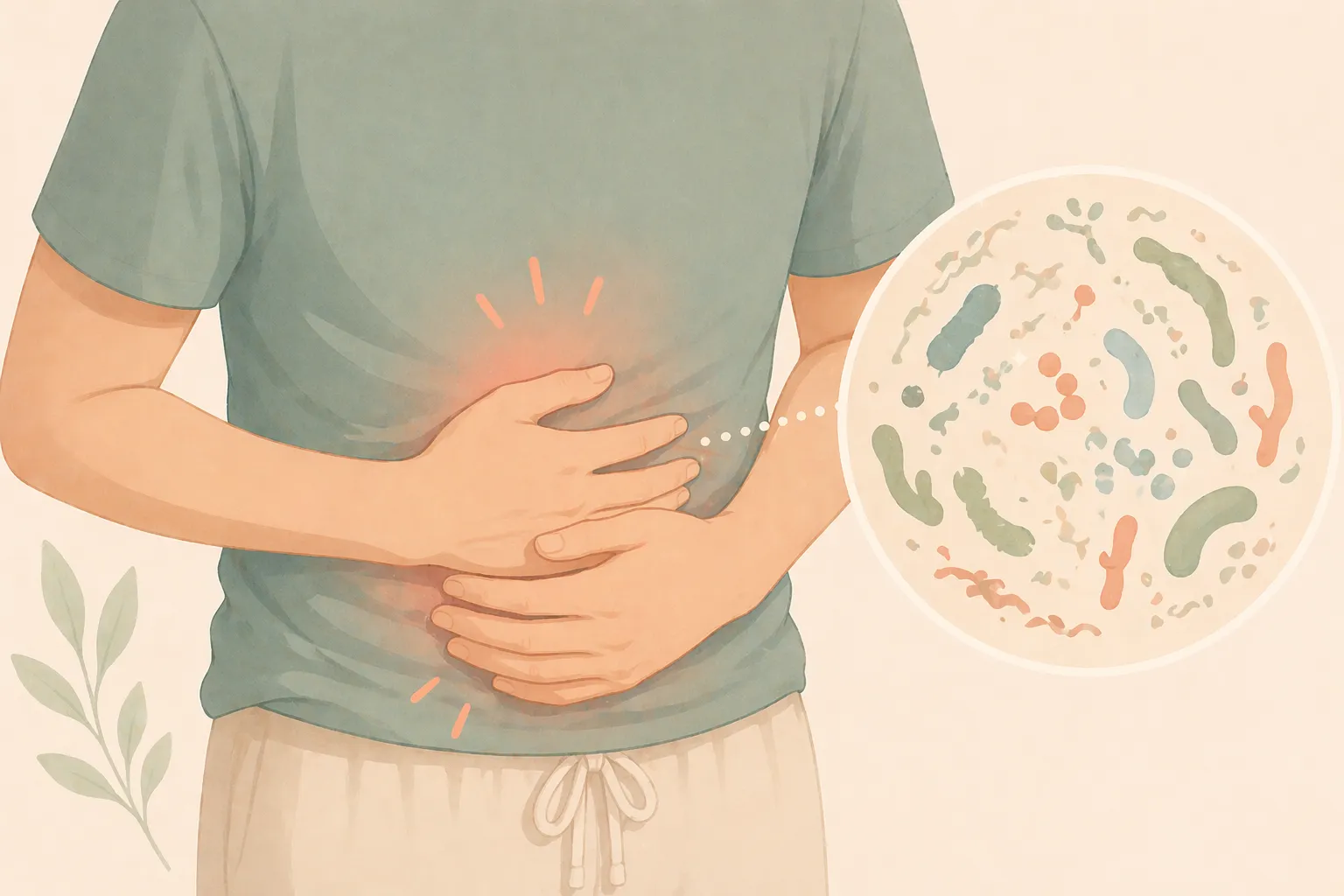
You cut out gluten. You added more vegetables. You drink kombucha and take a probiotic. And yet — every afternoon, you look three months pregnant and feel like your stomach is full of trapped air.
This is one of the most frustrating experiences in gut health, and it's extremely common. The reason it keeps happening isn't that you're doing the wrong diet. It's that diet changes alone can't fix what's actually broken.
The real problem, in most persistent cases, is your gut microbiome.
Key Takeaway: Persistent bloating despite healthy eating usually signals gut dysbiosis — a bacterial imbalance that drives excess gas production, impairs motility, and triggers inflammation cycles your diet alone can't resolve.
What Dysbiosis Actually Means (And Why It Matters for Bloating)
Dysbiosis isn't just a buzzword. It refers to a measurable shift in the composition of your gut bacteria — specifically, a loss of microbial diversity and a change in the ratio of bacterial species that live in your intestines.
In a healthy gut, you want a robust community with a balance of key players. In chronic bloating, the research tells a consistent story: the good bacteria are depleted, and opportunistic bacteria fill the gap.
Specifically, beneficial strains like Faecalibacterium prausnitzii, Akkermansia muciniphila, Bifidobacterium spp., and Bacteroides spp. are reduced in over 80% of functional abdominal bloating cases. What rises in their place are inflammatory opportunists — Proteobacteria like Klebsiella, Sutterella wadsworthensis, and members of Enterobacteriaceae — bacteria that ferment carbohydrates aggressively and produce large volumes of hydrogen and methane gas.
That gas has to go somewhere. Most of it goes nowhere fast, which is why you feel distended and uncomfortable for hours after eating.
Science Note: Researchers measure dysbiosis using the Firmicutes/Bacteroidetes (F/B) ratio. A healthy gut typically shows a ratio above 1.5. In functional abdominal bloating, this ratio often drops below that threshold — a signal that the microbial ecosystem has tipped in the wrong direction.
The Bacteria You Want More Of
Faecalibacterium prausnitzii is one of the most important anti-inflammatory bacteria in the human gut. Low levels are consistently linked to gut inflammation and impaired barrier function. Akkermansia muciniphila maintains the mucus layer that lines your intestinal wall — without enough of it, the gut lining becomes more permeable. Bifidobacterium strains help regulate fermentation and keep gas production at manageable levels.
When these species decline, you don't just lose their individual benefits. You lose the regulatory role they play in keeping the whole community balanced.
The Bacteria Causing the Gas
Proteobacteria are a normal part of the gut in small amounts. The problem starts when dysbiosis allows them to dominate. They're efficient fermenters — they break down undigested carbohydrates and fibers quickly, releasing hydrogen gas as a byproduct. In a balanced gut, this is modulated. In a dysbiotic gut, the fermentation is excessive and poorly regulated, producing the gas that causes that afternoon balloon feeling.
SIBO: The Bloating Driver Most People Miss
Small intestinal bacterial overgrowth (SIBO) is exactly what it sounds like: bacteria that belong in your large intestine have migrated upward and colonized your small intestine. This matters a lot for bloating because the small intestine is where most of your food gets absorbed — and bacteria shouldn't be there fermenting it.
SIBO contributes to roughly 40–50% of persistent bloating cases. When bacteria get access to partially digested carbohydrates in the small intestine, they ferment them before absorption can happen, producing hydrogen and methane gas in exactly the wrong place — high up in your digestive tract, where it causes pressure, distension, and discomfort well before food even reaches the colon.
Try This: If your bloating consistently hits within 60–90 minutes of eating (especially carb-heavy meals), and is worse with foods like onions, garlic, legumes, or wheat, SIBO is worth investigating. Ask your doctor about a lactulose or glucose breath test — it's non-invasive and can confirm hydrogen or methane overproduction in the small intestine.
What makes SIBO particularly stubborn is that it both causes dysbiosis and is caused by it. High Proteobacteria and low Actinobacteria in stool testing are associated with SIBO, which means treating the infection without also addressing the underlying microbiome imbalance often leads to recurrence.
Why SIBO Treatment Doesn't Always Fix the Bloating
This is something a lot of people run into: they do a SIBO protocol — antibiotics or herbal antimicrobials — and their breath test comes back clear, but the bloating persists. The likely reason is visceral hypersensitivity.
During active SIBO, your gut becomes hypersensitized to gas and distension. The enteric nervous system — the network of neurons lining your gut — gets recalibrated to treat normal amounts of gas as painful. Even after the bacterial overgrowth is resolved, this hypersensitivity can persist, meaning your gut is still overreacting to stimuli that shouldn't be a problem. It's a gut-brain axis issue that outlasts the infection itself.
Leaky Gut: The Inflammation Cycle That Keeps Bloating Alive
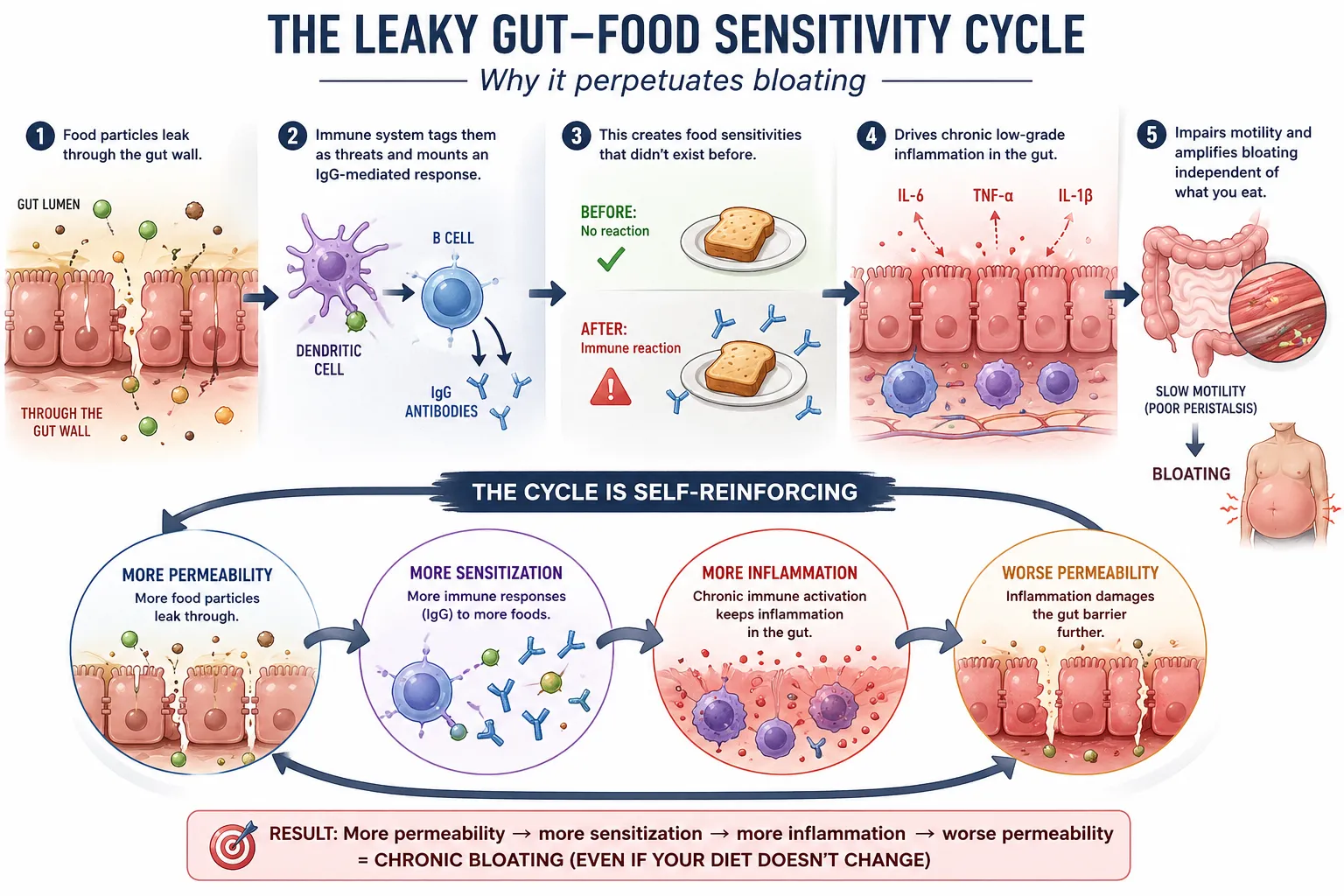
Your gut lining is supposed to act as a selective barrier — letting nutrients through while keeping bacteria, food particles, and waste products out of your bloodstream. In a dysbiotic gut, this barrier gets compromised.
Akkermansia muciniphila is a key guardian of the mucus layer that protects this lining. When Akkermansia is depleted (as it is in most dysbiosis cases), mucin-degrading bacteria can break down that protective layer, increasing intestinal permeability — what's commonly called leaky gut.
Elevated zonulin levels (a marker of tight junction dysfunction) appear in roughly 19% of chronic bloating cases, and elevated α1-antitrypsin — another permeability marker — appears in about 17%. These aren't massive numbers, but they're meaningful: they show that gut barrier dysfunction is present even in people who don't have obvious digestive disease and who consider themselves healthy eaters.
Here's why this perpetuates bloating: when food particles leak through the gut wall, your immune system tags them as threats and mounts an IgG-mediated response. This creates food sensitivities that didn't exist before — and it drives chronic low-grade inflammation in the gut that impairs motility and amplifies bloating independent of what you eat. The leaky gut–food sensitivity cycle is self-reinforcing: more permeability creates more sensitization, which creates more inflammation, which worsens permeability.
Science Note: Elevated calprotectin (an inflammatory marker measured in stool) and elevated secretory IgA appear in over 59% of functional abdominal bloating cases — indicating measurable immune activation in the gut, even in people without diagnosed inflammatory bowel disease.
What Makes Dysbiosis Worse
Before getting into what actually helps, it's worth naming the inputs that actively degrade your microbiome. Most people are running several of these at once without realizing it:
Antibiotics — even a single course can reduce microbial diversity significantly, and without active reseeding, recovery is incomplete
Chronic stress — cortisol alters gut motility and reduces beneficial bacteria, particularly Lactobacillus species
Low stomach acid — stomach acid is your first line of defense against pathogenic bacteria migrating upstream; PPI use and H. pylori are common culprits
Rapid fiber increases — adding high-fiber foods too fast gives dysbiotic bacteria more fuel before beneficial strains can catch up
Poor enzyme production — undigested food reaching the colon provides substrate for fermentation by the wrong bacteria
Probiotics also deserve a note here: they can initially worsen bloating during a microbiome transition. This isn't necessarily a bad sign — it often reflects bacterial die-off or a shift in fermentation dynamics — but it's worth going low and slow rather than flooding your gut with high-dose probiotics overnight.
How to Actually Fix Persistent Bloating
The research is clear that diet changes alone — cutting FODMAPs, going gluten-free, eating more fiber — don't address the root cause when dysbiosis is driving the bloating. They can reduce symptom load, but the underlying microbial imbalance persists.
Here's what actually works, based on the mechanisms above:
Test before treating. A comprehensive stool test (like GI-MAP or similar) can show your F/B ratio, Akkermansia levels, inflammation markers, and presence of pathogenic bacteria. A lactulose breath test can confirm SIBO. Guessing at treatment without data is expensive and slow.
Address SIBO if present. Rifaximin (prescription) or herbal antimicrobials (allicin, berberine, oregano oil) can reduce overgrowth. But this is step one, not the complete protocol.
Reseed beneficial bacteria strategically. Strains that have actual evidence behind them for bloating include Lactobacillus plantarum, Bifidobacterium infantis, and spore-based probiotics (like Bacillus coagulans) that survive the small intestine and reach the colon. Look for products with strain-specific research.
Feed the right bacteria. Akkermansia and Faecalibacterium prausnitzii are both boosted by polyphenols (berries, pomegranate, green tea) and specific fibers like inulin and arabinoxylan. Go slow — start with small amounts and increase over weeks, not days.
Support the gut barrier. Zinc carnosine, L-glutamine, and collagen peptides have evidence for tight junction support. Reducing inflammatory triggers (alcohol, NSAIDs, ultra-processed foods) matters just as much.
Address the gut-brain axis. If visceral hypersensitivity is contributing — especially post-SIBO — gut-directed hypnotherapy, low-dose antidepressants, and diaphragmatic breathing have clinical support for reducing gut sensitivity.
None of this is a quick fix. Microbial rebalancing takes weeks to months. But understanding that this is a systems problem — not a food problem — is the shift that actually moves the needle. If you're looking for a starting point on building habits that support your gut long-term, the daily gut health habits guide covers what to stack and in what order.
For a deeper look at how stress specifically degrades your microbiome, see the piece on the gut-brain axis and chronic stress.
Key Takeaway: Persistent bloating is a microbial problem, not just a dietary one. Until the bacterial imbalance is addressed — by testing, treating SIBO if present, and actively reseeding beneficial species — symptom management through diet will keep hitting a ceiling.
The Bottom Line
If you've been eating well and still can't shake the bloat, you haven't failed at your diet. You're dealing with a gut ecosystem that's out of balance in ways that diet changes alone can't fix. The bacteria driving your symptoms — the excess gas producers, the inflammation triggers, the barrier degraders — need to be directly addressed.
The most useful next step you can take today: get a comprehensive stool test. It's the only way to know which specific imbalances you're dealing with, so you're not guessing at solutions. Everything else flows from that data.
Frequently Asked Questions
Science Note
Try This
FAQ
Why am I bloated after eating healthy food?
Healthy foods — especially high-fiber vegetables, legumes, and fermented foods — can trigger bloating when your gut bacteria are imbalanced. In a dysbiotic gut, opportunistic bacteria ferment fiber and carbohydrates aggressively, producing excess gas. The problem isn't the food itself; it's that your microbiome isn't in a state to process it cleanly. Adding more fiber to a dysbiotic gut can actually worsen symptoms short-term.
How do I know if I have SIBO?
The standard test is a lactulose or glucose breath test, which measures hydrogen and methane gas produced by bacteria in your small intestine after you consume a sugar solution. Key signs that SIBO may be a factor: bloating that starts within 60–90 minutes of eating, worsening with FODMAPs (garlic, onions, wheat, legumes), and bloating that hasn't improved with dietary changes alone. A GI doctor can order the breath test.
Can probiotics make bloating worse?
Yes, temporarily. When you introduce new bacterial strains, they can shift fermentation patterns in ways that initially increase gas production. This is sometimes called a 'die-off' or adjustment reaction. It typically resolves within 1–2 weeks. If bloating persists or worsens beyond that, the specific strain may not be right for your gut profile, or an underlying issue like SIBO needs to be addressed first before probiotics will be effective.
What is leaky gut and how does it cause bloating?
Leaky gut (intestinal hyperpermeability) occurs when the tight junctions between cells in your gut lining loosen, allowing bacteria, food particles, and toxins to pass into the bloodstream. Your immune system treats these as threats, triggering inflammation. This chronic low-grade inflammation impairs gut motility, disrupts normal digestion, and can create new food sensitivities — all of which contribute to persistent bloating independent of what you eat.
What foods feed good gut bacteria and reduce bloating?
Polyphenol-rich foods — berries, pomegranate, dark chocolate, green tea — specifically feed Akkermansia muciniphila and Faecalibacterium prausnitzii, two of the most important anti-inflammatory species. Fermented foods (plain yogurt, kefir, kimchi, sauerkraut) introduce live bacteria. Prebiotic fibers like inulin (chicory, Jerusalem artichoke) feed Bifidobacterium. The key is going slowly — introduce these gradually over weeks to avoid overwhelming a dysbiotic gut.
How long does it take to fix gut dysbiosis?
Meaningful microbiome shifts typically take 6–12 weeks of consistent intervention. This includes dietary changes, targeted probiotics, and addressing any underlying drivers like SIBO or leaky gut. Short-term relief may come faster with specific interventions (like antimicrobials for SIBO), but the goal of stable microbial rebalancing is a longer-term process. Retesting via stool analysis after 8–12 weeks gives you data on whether the approach is working.
Is bloating a sign of something serious?
Most persistent bloating is functional — driven by dysbiosis, SIBO, or motility issues — rather than structural disease. However, bloating accompanied by unexplained weight loss, blood in stool, severe pain, or bloating that came on suddenly after a long asymptomatic period warrants a medical evaluation to rule out conditions like IBD, celiac disease, or in rare cases, ovarian or colorectal cancer. When in doubt, get checked.
Biohacking without the $10K budget
Get practical weekly insights on sleep, gut health, and mindset, built for real life in Southeast Asia and beyond.
Subscribe freeRelated Articles
Gut Health and Sleep: The Bidirectional Connection
Poor sleep wrecks your gut. A disrupted gut wrecks your sleep. Here's how the loop works — and how to start breaking it.
How Physical Health Quietly Shapes Your Mental State
Your mindset isn't just in your head. Sleep, gut signaling, and daily habits are quietly running the show — here's the science behind it.